Zero-click search describes a search without a subsequent click on an external result. Direct answers, other search features or abandonment can all be involved. It establishes neither lost business nor proven brand impact by itself.
What is a zero-click search?
A search is followed by no external result click. The person may receive a short answer, refine the query, continue within the service or abandon the task. Similar click counts can hide different situations.
This is not exclusively an AI phenomenon. A phone number, definition or other direct information can satisfy a search without a generated answer.
Do not confuse it with a visit your analytics failed to record. Missing consent or technical limitations affect observation on your website. No recorded visit does not prove no click.
Three possible journeys and the missing evidence
These are illustrative examples, not measured customer journeys.
| Situation | What you might know | What remains unknown |
|---|---|---|
| A definition answers the question | Your page has impressions but few clicks. | Whether your explanation was read or useful. |
| A vendor name is remembered | Your brand appears in a documented answer. | Whether a person saw or remembered it. |
| A later direct visit occurs | A visit has no attributable referrer. | Whether the earlier search caused it. |
Do not classify every direct visit as an AI success. An optional “How did you hear about us?” question can add context, but remains self-reported evidence.
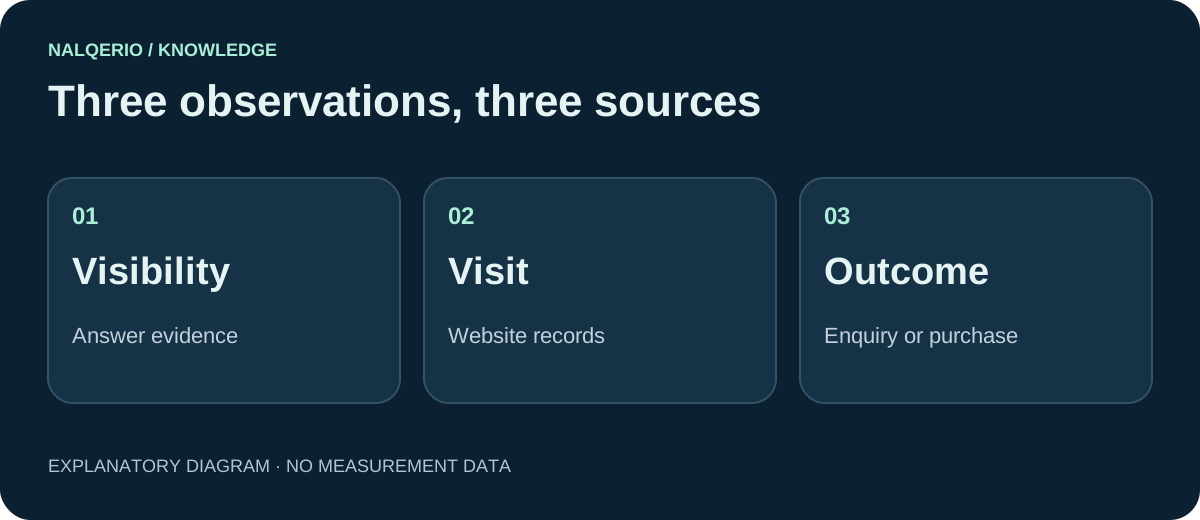
Use three separate measurement layers
Search performance: examine available impressions and clicks for appropriate pages and periods. Google includes its AI features in the overall Web performance report. This does not reconstruct an individual customer journey.
Answer observation: retain a limited question-and-answer sample. Which brands and sources appear? The finding belongs to the examined environment.
Business outcomes: count suitable enquiries, trials or purchases from actual records. Unknown origins stay unknown. The AI traffic guide expands on website attribution.
A GEO report can show these layers side by side without merging them into a supposedly complete impact score.
Give a click a useful purpose
Provide the basic answer clearly. The next step on your website should add something usable: a worksheet, detailed instructions, a genuine product walkthrough or a way to examine the reader’s own case.
For a GEO tool, a definition is an introduction. An example report or product tour answers a different question: would this workflow help me?
Do not hide the promised answer behind a registration form merely to force a visit. Helpful content can build confidence even when a reader does not buy. Avoid invented exclusivity or a claim designed only to provoke a click.
When fewer clicks deserve investigation
If clicks on a buying-related page and suitable enquiries both decline, investigate. Check technical issues, changing queries, seasonality and how the offer is presented. Blaming AI without supporting evidence is only a hypothesis.
A terminology article may have less direct purchase relevance. Do not apply the same conversion expectation to introductory and product pages.
The AI Mode and AI Overviews guide explains the search context. The brand-mentions guide helps avoid treating a name occurrence as buying interest.
Start with one page and one unresolved question
Choose an important page. State the question it fully answers and the additional next step it offers. Review that page’s available evidence instead of applying a general zero-click percentage to your business.
Nalqerio contributes observations from selected authorised API answers. It does not measure your audience’s complete zero-click rate or automatically attribute direct visits to AI answers.
If your next task is to understand how three customer questions describe your offer, a trial with your own questions may help. The GEO strategy guide provides the broader working plan.
Frequently asked questions
Are zero-click searches always lost customers?
No. Some tasks need no website visit, and some searches are abandoned. You cannot assume purchase intent from the absence of a click.
Can direct visits count as AI traffic?
Not automatically. Direct or a missing referrer indicates an attribution gap, not a proven AI origin.
Does Nalqerio measure zero-click rate?
No. It documents selected API answers and available evidence, not all searches and customer journeys in your market.
Sources and further reading
- Google Search Central: AI features and your website
- Google Search Console: Performance report
- Nalqerio: methodology
Methods, product scope and sources reflect the publication date shown. Examples are not measurements of your website. Linked product pages provide current plan and provider details.
