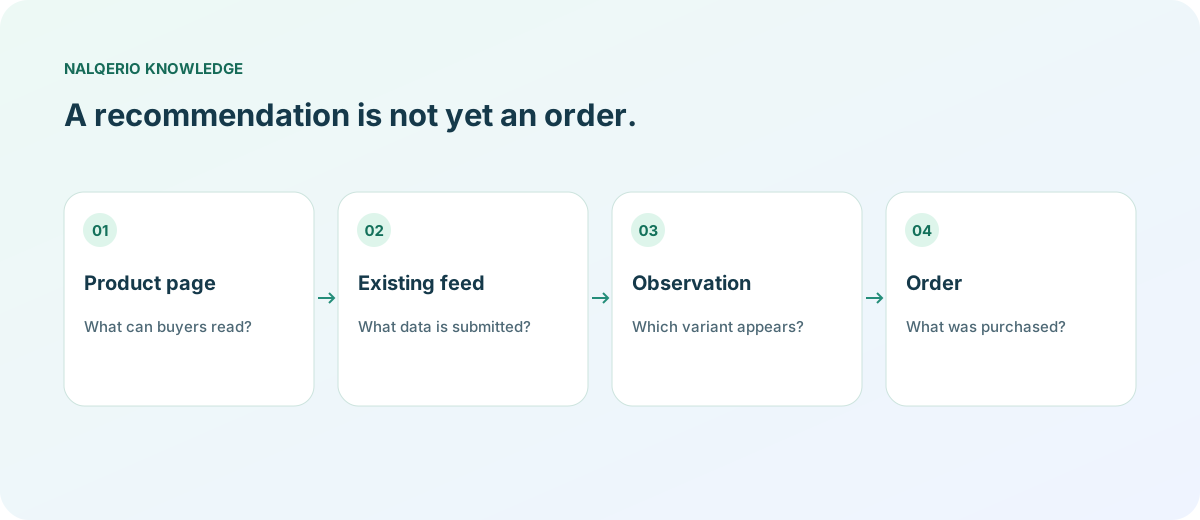
Distinguish product discovery in ChatGPT, feed-based data submission and purchases in your store. Start with a small set of real products and reconcile variants, price, stock and destination pages. OpenAI currently identifies the US as the available shopping market on its merchant page; acceptance and placement are not guaranteed.
What does ChatGPT shopping mean for an online store?
ChatGPT can show product options with images and links when a question suggests shopping intent. That is different from a text answer that simply mentions your store. A single query cannot represent every possible product recommendation or buyer context.
The current OpenAI merchant page describes discovery followed by purchases on merchant-owned sites or apps. It currently names the US as the available market. Review that status before planning a rollout elsewhere or building a checkout integration. A German-language ChatGPT answer is not evidence that merchant features are enabled for Germany.
This guide addresses merchants preparing product information and interpreting observations. The separate ChatGPT SEO guide covers general website discovery rather than catalog-specific data.
A ChatGPT shopping feed is not Product schema
A feed transfers catalog information to a recipient. Product schema is structured markup published on your website. They should describe the same facts, but they are different technical paths. Adding a JSON-LD block does not automatically apply for feed integration.
OpenAI's merchant page provides an application route for product data. Check whether your commerce platform is already integrated and which steps apply to you using that page and the current product specification. Do not assume access has been granted. An application or technically valid feed is not a placement promise.
| Data path | What to check |
|---|---|
| Visible product page | What customers can read before buying |
| Product schema in HTML | Whether the same facts are accurately marked up |
| Feed sent to a recipient | What was transferred, accepted and last updated |
The Product schema JSON-LD guide handles implementation on your site. Here, the task is consistency between paths and responsibility for maintaining them.
Five product facts worth checking first
Choose three real products instead of rebuilding the whole catalog. Select one straightforward product, one with variants and one with frequent stock changes. This is a working sample, not a representative study of every item your store sells.
| Field | Concrete check |
|---|---|
| Identity | Do the SKU and name refer to the same box everywhere? |
| Variant | Do the link and image match the selected size and color? |
| Price | Are the amount and currency correct for the intended market? |
| Availability | Does the status reflect what can actually be ordered? |
| Destination | Can a visitor reach the right item without logging in? |
Record each discrepancy with a URL, timestamp and responsible data source. “Bad feed” gives a developer little to investigate; “Size S still exports the image for L” identifies a fix. After correcting it, verify that the next actual output changed.
Explain material limits as well: dimensions, materials and included accessories should not become clear only after checkout. A list of keywords cannot replace the answer to whether a customer's tools fit inside the box.
Check open product questions separately from branded facts
An open question might be: “Which stackable metal box suits small parts in a workshop?” An additional requirement could specify maximum height. Only a third question names your store or an exact SKU. This separates product discovery from factual checks about a known item.
Record the environment, visible mode, market, language and date. Note whether you observed text, a product presentation or a merchant link. Open the link and check the actual variant. Do not reuse an AI summary as a current product description without verifying it.
The OpenAI shopping help page describes how query context affects selection and notes possible inaccuracies. A product missing from one sample is not proof of permanent exclusion. A single appearance is likewise not evidence of a lasting placement.
What Nalqerio documents and what your store must measure
Nalqerio documents API answers to customer questions. Depending on the effectively released measurement environment, you can inspect brand mentions and sources. It does not submit a shopping feed or directly track your product's position in a personal ChatGPT carousel.
Keep three forms of evidence separate: the observed answer, actual store visitors and completed orders. A recommendation screenshot belongs to the first category. A click is not an order. Avoid linking identifiable people to third-party conversations without an appropriate legal basis.
The Nalqerio methodology explains the scope. The sources product tour shows the workflow. For correct business identity, continue with entity SEO; for retrieval problems, use the AI crawler guide.
Run a bounded first store check
Fix a discrepancy that could stop a real customer buying. A wrong variant or broken product link is more urgent than adding another keyword to the title. Then establish who maintains changes to price and stock across all data paths.
For general AI answers about your brand, the free OpenAI-based Nalqerio trial provides a limited start. A subscription is useful only if the documented questions help your business. The trial neither activates shopping features nor promises sales.
Frequently asked questions
Is ChatGPT shopping enabled for merchants in Germany?
The OpenAI merchant page checked for this publication names the US. Verify current regional availability for your case; a German-language answer is not merchant approval.
Does submitting a feed guarantee recommendations?
No. Complete data provides a better foundation, but does not guarantee acceptance, placement or purchases.
Can Nalqerio register my products for ChatGPT shopping?
No. Nalqerio documents API samples for customer questions. Feed submission, shopping presentation and checkout are separate tasks.
Sources and further reading
- OpenAI: merchants and regional availability
- OpenAI: product specification
- OpenAI: shopping selection
Methods, product scope and sources reflect the publication date shown. Examples are not measurements of your website. Linked product pages provide current plan and provider details.
