Search intent is the task behind a search. Wording, context and visible results provide clues, but they do not always establish a single answer. For GEO, record the specific question and conditions instead of assuming that every AI response represents the same intent.
Search intent means more than choosing a category
“Maintenance software price” suggests a cost question. It does not reveal whether the person wants a first estimate or a quote for a hundred assets. Their situation determines which answer helps.
Start two sentences: “This person already knows…” and “After reading, they need to…”. If you cannot finish the second sentence, the assignment lacks direction. Consider what is blocking a decision: scope, prerequisites, pricing rules or an understandable process.
You may begin with an editorial hypothesis. Label it as a hypothesis rather than confirmed customer research. Actual queries, support questions and documented use cases are stronger evidence than an invented buyer story.
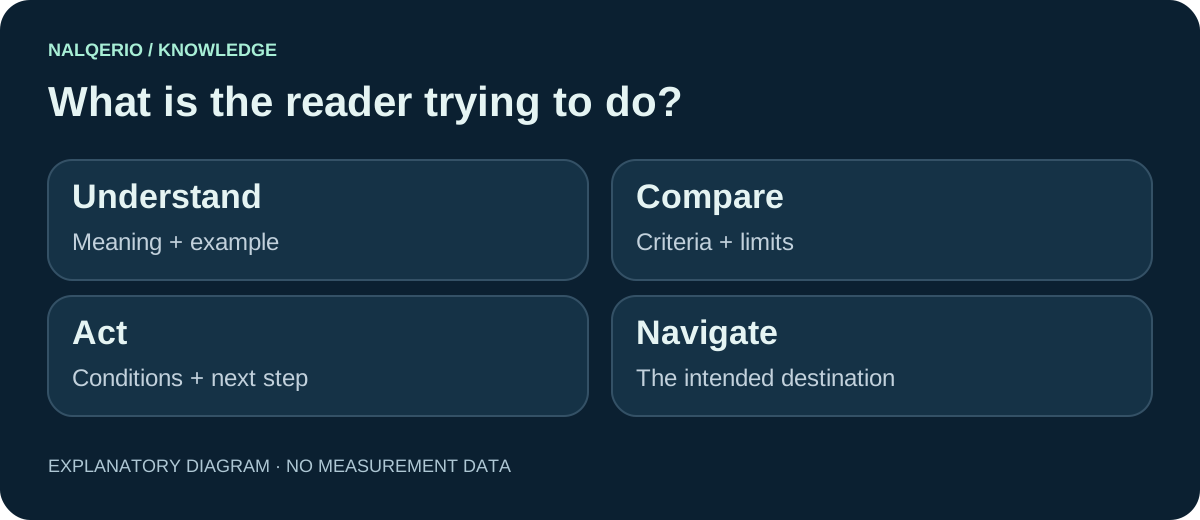
Four reader tasks and suitable page types
Use this as a working model. One query can contain more than one task. The examples below describe fictional maintenance-software searches, not observed search-volume data.
| Task | Example question | Useful page response |
|---|---|---|
| Understand | What is a maintenance schedule? | A clear explanation with a concrete example and limits. |
| Compare | Which maintenance software supports several locations? | A comparison using verified criteria, scope and trade-offs. |
| Act | How much does this plan cost for my team? | Current pricing rules, prerequisites and the next practical step. |
| Navigate | Where do I open my maintenance dashboard? | A clear route to the intended application, not another generic article. |
Do not force a sales pitch into every information request. Someone looking for a template needs a usable template first. A relevant product link can follow when it explains how to put the work into practice.
A useful industry example is search intent for real estate agencies: owners choose an agency while buyers look for an available property. The same website needs different entry points.
How to investigate the intent of a query
First, read the full wording. Words such as “example”, “cost”, “alternative” or “login” are clues. Second, add the plausible situation: a beginner learning a term has a different need from a team replacing a supplier.
Third, inspect the actual results for the relevant language and market. Record whether explanations, product pages, tools or comparisons dominate. Fourth, read a few suitable results and note what task they solve. Finally, compare those observations with genuine customer questions and your own offer.
Results are observations at a particular time and under particular conditions. They can vary and contain mixed intents. Record ambiguity rather than treating a label from a tool as proof of a person’s private motivation.
Translate the chosen task into the content brief. If another page already answers it, improve that page before creating a competing URL.
For business purchases, the B2B question matrix helps account for different roles and prerequisites.
The SaaS keyword selection guide gives a concrete software example: not every search question attracts a suitable trial user.
Worked example: a schedule template or a buying guide?
Fictional example: a reader searches for a maintenance schedule template. Their immediate task is to understand which fields to record and how to use them. An article that spends its opening paragraphs praising software leaves that task unresolved.
A helpful page could provide a sample structure, explain each field and show how to adapt it. It would distinguish a general planning aid from equipment-specific or safety requirements. A buying guide belongs to a different question: which application supports the required workflow?
The pages may link to each other when the transition is useful. “If several teams maintain the same schedule, compare permission and version requirements” is a meaningful next step. Repeating “buy now” after every paragraph is not.
Use topic clusters to assign these tasks. The example illustrates editorial reasoning; it does not claim that either phrase currently ranks or brings a particular number of visits.
What changes when you work with AI questions?
A conversational question often carries more context than a short keyword. “Which software suits a small workshop with two sites?” gives useful constraints. Preserve them when you write the page and when you compare answers.
Related questions can reveal missing explanations. The query fan-out guide shows how to organise follow-up questions without pretending to observe a provider’s hidden reasoning. Do not generate dozens of near-identical pages for small wording changes.
Nalqerio documents selected authorised API responses and available sources. It does not read a visitor’s personal search intent or classify all their private chats. Use the original answer and sources to identify a concrete content gap, not to invent certainty about the person behind a query.
Choose one useful next action
Select one important question and name its main task. Identify the page responsible for answering it, then list the missing information. Review the revised page against the original decision rather than a count of keyword mentions.
The content audit helps prioritise improvements. For selected AI observations, keep the question, language, provider and date clear; the measurement guide explains the limits. Visit the product tour if you want to see how Nalqerio handles the resulting evidence.
Frequently asked questions
Can one query have several intents?
Yes. Broad or short queries can contain several plausible tasks. Record the uncertainty and decide which task your particular page can serve well.
Should informational pages include a product link?
A relevant next step can be helpful after the information need has been met. The link should explain the connection rather than interrupt the answer.
Does Nalqerio automatically identify a visitor’s intent?
No. The workflow uses documented questions and selected API answers. It does not reveal a visitor’s private intentions.
Sources and further reading
- Google Search Central: helpful content
- Google Search Central: AI features and your website
- Nalqerio: methodology
Methods, product scope and sources reflect the publication date shown. Examples are not measurements of your website. Linked product pages provide current plan and provider details.
